Tajikistan
Asia11 photographs
Dushanbe's gold-and-marble monuments after dark, and a green-domed mausoleum complex worth the detour to Khujand.
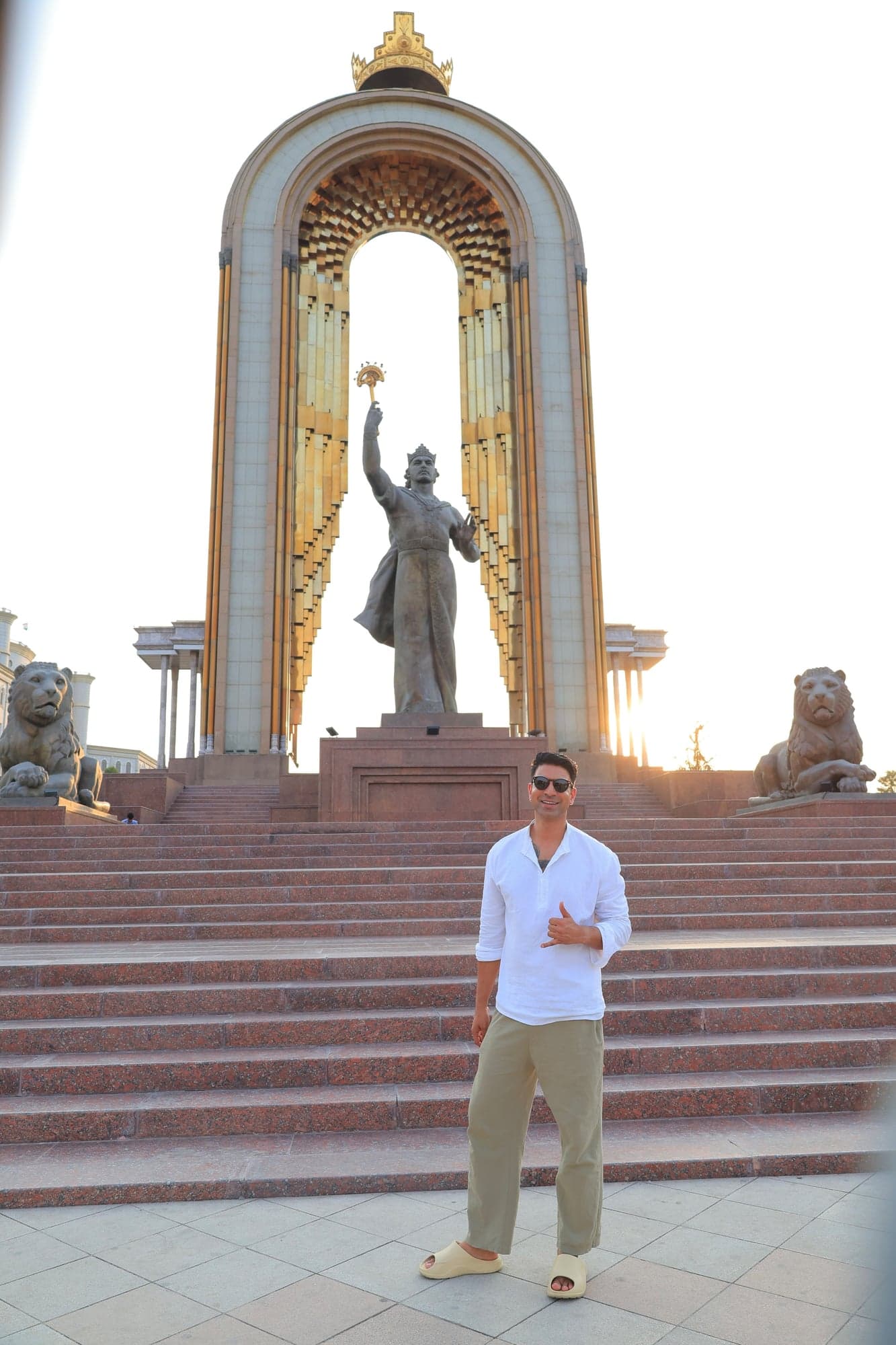
Dushanbe builds big, and it builds gold. The Ismoil Somoni Monument does both at once — a bronze king standing under a soaring, sunburst-gilded arch, flanked by stone lions, the whole thing catching fire in late afternoon light. A few blocks away the National Flagpole, once the tallest in the world, still stands taller than almost anything else in the city, and the Palace of Nations glows white and gold after dark behind fountains lit up violet and blue. The Central Mosque, finished only recently, is enormous — courtyards ringed with white marble arches, a dozen minarets, fountains running down the middle of a plaza built to hold thousands.
Dinner both nights leaned into the same theatrical mood — a restaurant with a mural of a turbaned prince and a caged parrot behind the table, sac-style bread and dried-fruit compote to start, then a rotating cast of salads, plov, dolma, and grilled meat that kept coming until we gave up. One evening ended on a carved wooden daybed with a hookah, looking back down a marble stairwell inside the Palace of Nations lobby, which is not a sentence I expected to write about a government building.
The detour north to Khujand, Tajikistan's second city near the Uzbek border, was worth the drive for the Sheikh Muslihiddin complex alone — turquoise domes and Timurid-style tilework that could pass for Samarkand, minus the crowds. It's the kind of place that makes you realise how much of this region's shared architectural language survives independent of whichever republic the map currently puts it in.