Peru
Americas19 photographs
From Inca ruins to desert oasis, Peru stays with you.
Peru hit me in layers. Cusco came first — that high-altitude city sitting at 3,400 metres where the air is thin and the stone walls of Inca palaces are still standing behind colonial church facades. The festival energy the day I arrived was something else: giant papier-mâché figures, a massive Sincretismo Cultural mural dominating a plaza wall, llama sculptures outside the Museo Nacional. I drank coca tea to fight the altitude and ate cuy for the first time at a restaurant where a giant guinea pig statue dressed as an Inca warrior stood guard at the entrance.
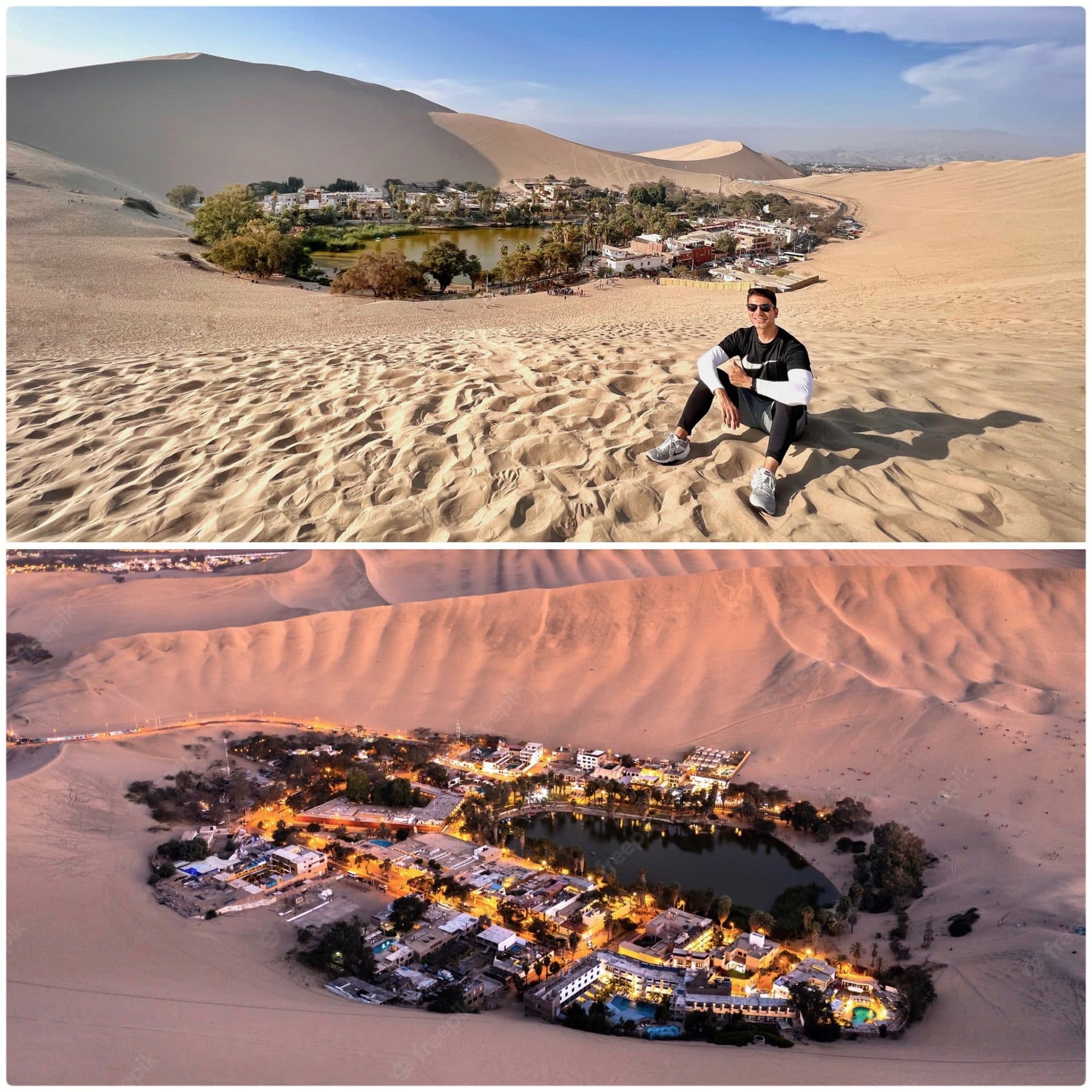
Machu Picchu was a full day. From the Sun Gate viewpoint, the citadel spreads out below with Huayna Picchu rising sharp behind it — that view stopped me cold. I'd seen it in photos a hundred times and it still felt unreal standing there in the morning light with the terraces catching the first sun. Then Huacachina, which is something completely different — a circle of palm trees and hotels around a lagoon, swallowed on all sides by sand dunes the colour of rust at sunset. The dune buggy ride out to the edge of the dunes, and then the aerial view of the oasis lit up at night, tiny and defiant in all that sand, was probably the single most surreal thing I saw in the whole trip.
Lima surprised me the most. Miraflores has this grey Pacific coast where the ocean churns cold and green below the cliffs, and the neighbourhood is full of murals — serious ones, political ones, art-school ones sprayed on entire building facades. The food scene there is genuinely on another level: I ate at one of those long tasting-menu restaurants where every course arrives on a different piece of handmade ceramic or a bed of straw, and each bite tasted like someone had been thinking about it for years. Peru is the kind of place that keeps unfolding — you think you understand it and then the next city or the next valley is completely different.