Mongolia
Asia13 photographs
A 40-metre steel Genghis Khan on the steppe, camel rides, and eagle hunters an hour outside the capital.
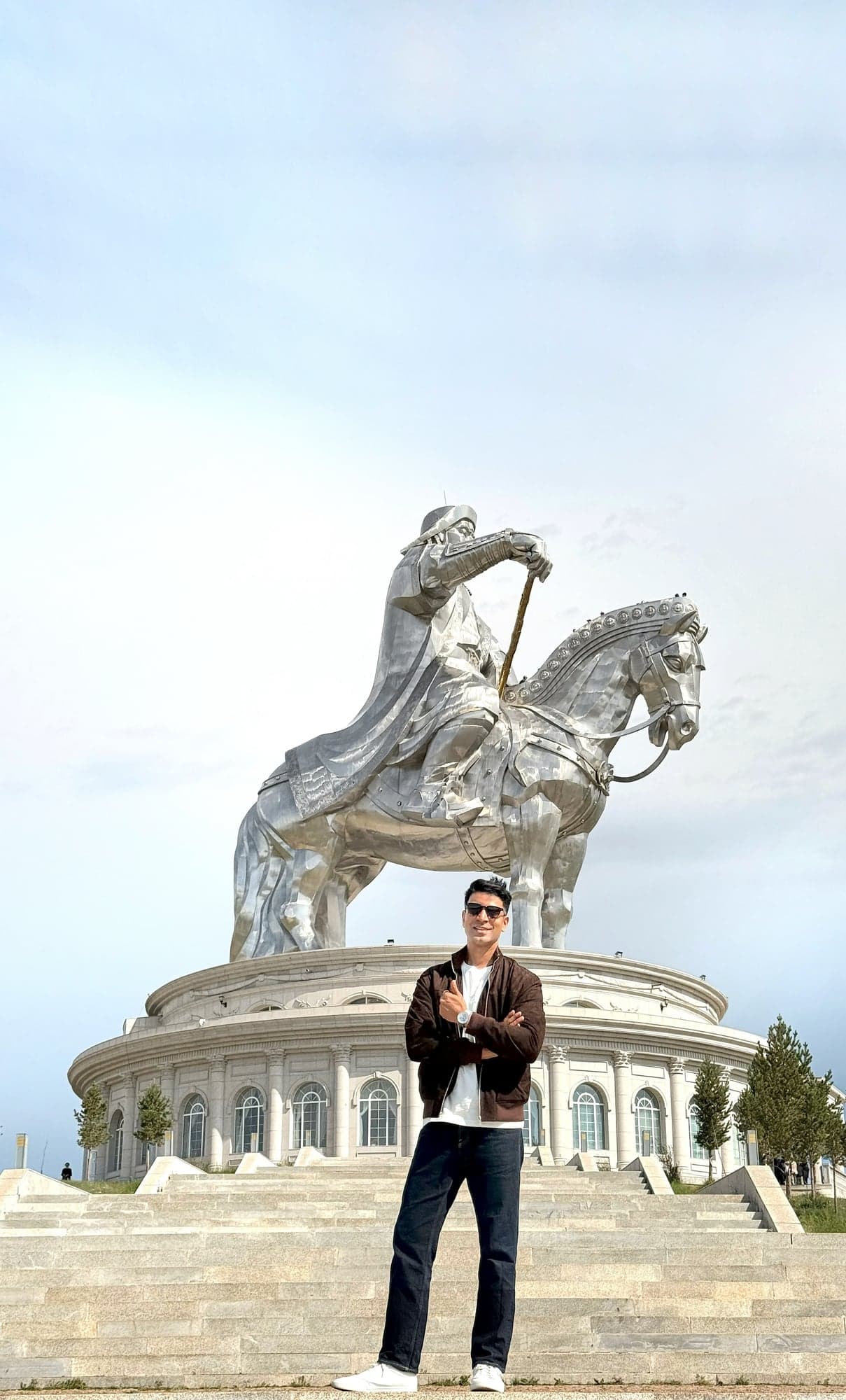
Ulaanbaatar is a strange, likeable mix of Soviet concrete and new glass towers wrapped around a valley of grassland, and it doesn't waste time telling you what country you're in — the Chinggis Khan Statue Complex at Tsonjin Boldog does that for you before you're even fully out of the city. It's an absurd, brilliant thing: 40 metres of gleaming steel, Genghis Khan on horseback holding a golden whip, visible from the highway long before you arrive. You can ride an elevator up through the horse's body and out onto a platform between its ears for a view over the exact spot where legend says he found a golden whip and decided to unite the tribes. Inside the visitor centre, a separate room holds a gold-plated throne room recreation that looks like something out of a fever dream, and outside, camel handlers and a golden eagle trainer were both doing steady business with anyone willing to sit for a photo.
Back in Ulaanbaatar, the Gandantegchinlen Monastery holds some of the finest Buddhist art I saw anywhere on this trip — an enormous Green Tara thangka, layered with dozens of smaller figures around a central deity, silk and gold thread catching the light in a dim hall that smelled of juniper incense. Dinner at Modern Nomads, a restaurant built entirely around the Chinggis Khan myth — a mural of the warrior-king on horseback watching over the table — turned into a plate of buuz, the steamed mutton dumplings that are basically the national dish, plus a slab of boiled meat and pickled carrot that no one at the table could resist finishing.
Gorkhi-Terelj National Park, an hour or so out of the city, was the quiet counterpoint to all of it — granite outcrops and pine forest opening onto a valley studded with white gers, the kind of view that explains in about five seconds why this country still measures distance in horses rather than roads.