Japan
Asia13 photographs
From Nagasaki's silence to Tokyo's raw fish and sumo streets.
Japan hit me differently from the moment the ship pulled into Nagasaki harbour. The water was flat and grey-blue, the hills rolled up behind the city in neat terraces, and the cold air had that particular winter-morning sharpness that makes everything feel real and close. Standing at the Nagasaki Peace Park in front of the 1945 monument — that date and time pressed into bronze — I felt the weight of the place settle in my chest. It wasn't like reading about it. It was something else.
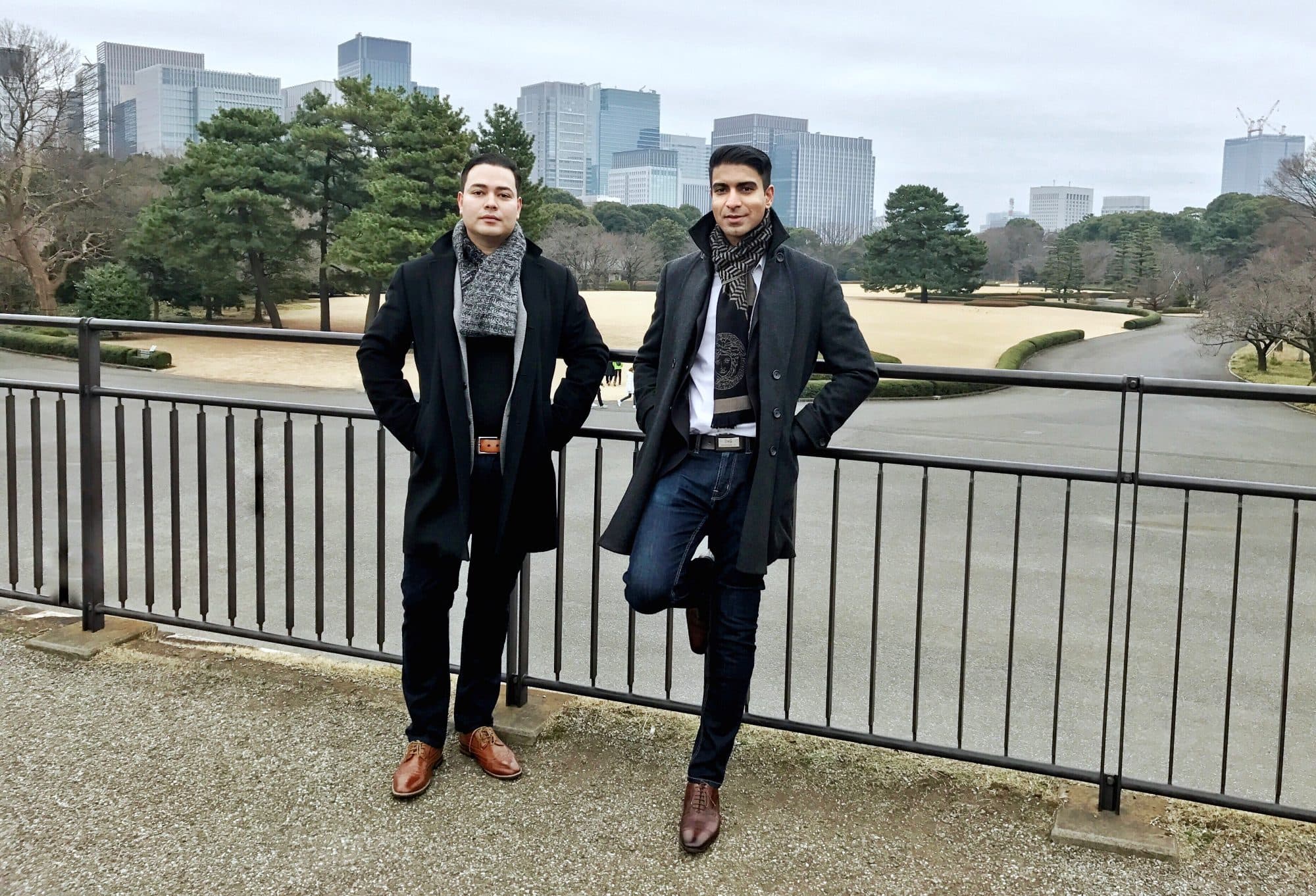
Tokyo came next, and it operates on a different frequency entirely. The Imperial Palace gardens in winter are stripped bare — sandy paths, pine trees holding their shape against a grey sky, and the glass towers of Marunouchi rising behind the old stone walls like a second city stacked on top of the first. I ate sushi at a counter where the chef laid each piece out on a wooden board without saying much, and that silence felt right. The fish was so fresh it barely needed the soy sauce.
The sumo culture caught me off guard. We ended up at a chanko-nabe restaurant decorated with framed wrestlers and calligraphy, eating from a bubbling iron pot, and then somehow bumped into actual rikishi on a street in Tokyo — big guys in long coats, hair tied up, walking calmly through the lunch crowd. The market stalls at Tsukiji had whole bluefin tuna on ice and every possible thing that comes from the sea. Japan does not do anything halfway, and I left with that feeling — full, cold, a little overwhelmed, and very glad I came.